English| EUR
Suggested for you
More currencies
Choose a language
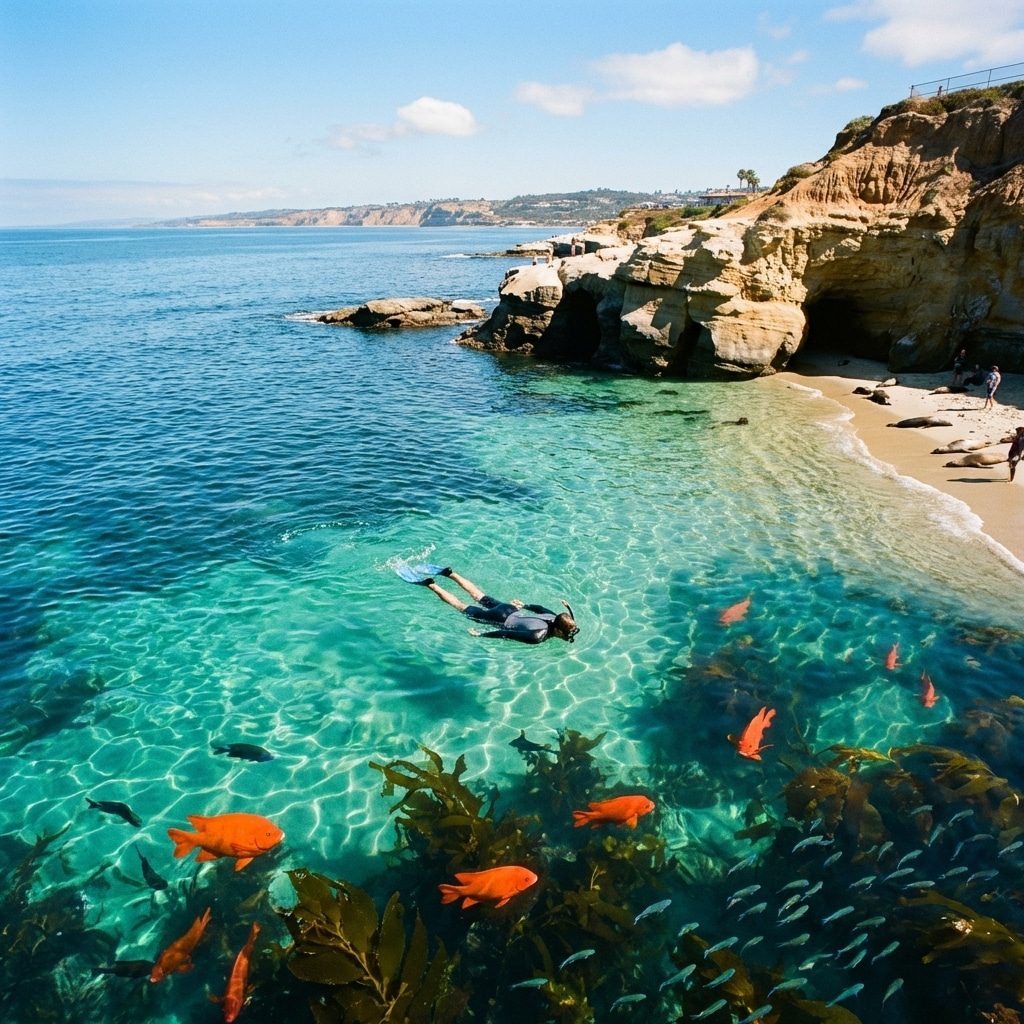
La Jolla Cove sits inside a protected marine reserve where visibility reaches 30 feet and the kelp forest starts just beyond the swim buoys. The question isn't whether the site itself is safe—it's whether the conditions on your chosen morning align with your skill level and the behavior of the resident sea lion colony.
Quick answer
Yes, snorkeling at La Jolla Cove is safe for most swimmers when conditions are calm and you maintain distance from sea lions. The marine reserve offers protected waters with no boat traffic, consistent depths of 10 to 20 feet, and lifeguard supervision year-round. Risk increases during winter swells, afternoon winds, and pupping season (May through July) when female sea lions become territorial. Early morning arrivals between 7:00 and 10:00 provide the calmest water and clearest visibility.
La Jolla Cove records fewer snorkeling incidents per visitor than most California beach entries, but the statistics mask a sharp seasonal divide. Winter swells from December through March generate surge that pins swimmers against the rocky entry point, while summer's calmer water reduces rescue calls by 60 percent. The San Diego Lifeguard Service stations personnel at the cove daily from dawn until dusk, and the shallow depth profile—never exceeding 25 feet within the main snorkel zone—means surface assistance reaches incidents in under two minutes. The kelp canopy stabilizes water movement and provides navigation reference points, but it also creates blind corners where sea lions rest between feeding runs. Adult California sea lions weigh up to 800 pounds and patrol the reserve's boundaries with little concern for human schedules. Defensive behavior peaks when mothers guard pups near the caves along the northern wall, and lifeguards close sections of the reserve when aggression incidents cluster. The marine reserve designation prohibits fishing and anchoring, which maintains the ecosystem but also means sea lions remain habituated to human presence rather than fearful of it. Rip currents form near the cove's eastern point when tidal exchange accelerates through the narrow mouth, pulling water seaward in a 15-foot-wide channel that shifts position with the tide. Swimmers who recognize the surface texture—choppy, discolored water moving against the prevailing flow—can avoid the current entirely by entering 50 feet west of the point. Water temperature ranges from 57°F in winter to 68°F in late summer, cold enough that hypothermia limits safe immersion time for anyone without thermal protection. A 3mm wetsuit extends comfortable snorkel duration from 20 minutes to over an hour, and the majority of divers visiting La Jolla Cove during autumn and winter months wear full suits. Snorkeling safety in La Jolla hinges on timing and self-assessment. The protected marine environment provides consistent conditions, but afternoon winds, seasonal swells, and wildlife behavior create windows when even experienced snorkelers postpone entry. Lifeguards post daily ocean condition reports at the access stairs, and red flag days—typically six to eight per month during winter—indicate conditions unsuitable for recreational snorkeling. The site remains accessible 24 hours, but unsupervised night or early dawn entries remove the safety net that makes daytime snorkeling at the cove statistically safer than most shore dive sites along the California coast.
“The shallow depth profile and lifeguard presence make surface assistance reach incidents in under two minutes.”
The best arrival window is 07:00–10:00, when calmer water, lighter winds, and higher visibility provide the safest conditions before crowds arrive. Timing your visit within this period helps mitigate risks associated with afternoon surge and heavy foot traffic.
65°F–70°F water
Warmest water temperatures occur, though peak tourism can crowd the shoreline.
58°F–62°F water
Water is cooler, requiring a wetsuit, but surf is generally more predictable.
55°F–58°F water
Stronger swells and storm surges make this the most challenging time for water entry.
—
The ideal daily window for lower surge levels and clearer visibility for snorkeling.
Verdict: Plan your visit for weekday mornings between 07:00 and 10:00 during the months of September or October for the best combination of warm water and calm conditions.
La Jolla Cove offers calm conditions most mornings, but several safety errors can turn a pleasant snorkel into a hazardous situation. Recognizing these pitfalls helps you stay safe in the marine reserve.
Ignoring red flags or lifeguard warnings
Lifeguards post warnings for dangerous surf, rip currents, or marine life activity. Always check conditions at the lifeguard tower before entering and postpone your snorkel if flags indicate unsafe water.
Swimming outside the protected cove area
The cove's kelp beds and rocky points buffer waves, but open water beyond them exposes you to strong currents and boat traffic. Stay within the marked cove boundaries where conditions remain calmer and rescue is easier.
Snorkeling alone without a buddy
Solo snorkelers have no one to signal distress or assist if cramps, equipment failure, or disorientation occur. Always snorkel with a partner and maintain visual contact throughout your swim.
Touching or chasing seals and sea lions
Marine mammals may bite if startled or cornered, and federal law prohibits harassment. Observe from at least 50 feet and let animals approach you if they choose.
Entering the water during afternoon wind shifts
Wind typically picks up after 14:00, creating chop that reduces visibility and makes surface swimming more strenuous. Plan your snorkel for the 07:00–10:00 window when water remains calmer.
Underestimating cold water without thermal protection
Even in summer, Pacific water averages 17–20°C and causes rapid heat loss. Wear a wetsuit or shorty appropriate for the season to prevent hypothermia during extended swims.
La Jolla Cove sits within a protected marine reserve where state law prohibits removing or disturbing any marine life. Following these rules protects both the ecosystem and your safety in the water.
La Jolla Cove is a public beach area that remains accessible to visitors throughout the week. The site is open daily for public access.
La Jolla Cove is located at 1100 Coast Blvd, La Jolla, CA 92037. The most direct approach involves driving or using local transit to reach the village area, followed by a short walk to the coastline.
I-5 to La Jolla Village Drive, proceed to Coast Blvd
MTS Route 30 to La Jolla Blvd & Pearl St
From Coast Blvd street parking to the beach access stairs
Parking in the immediate vicinity of 1100 Coast Blvd is limited, so prioritize the 07:00–10:00 arrival window to secure a space. Once parked, proceed to the designated access point where you will navigate 2 sets of stairs to reach the water.
Everything you need to know about is it safe to snorkel in la jolla cove
Generally, it is safe to snorkel in La Jolla Cove for experienced swimmers who are comfortable in open water. Always check current lifeguard reports and ocean conditions before entering the water, as the Pacific can have unpredictable currents.
Optimal snorkeling occurs during calm days with low swell and high visibility. Many visitors find that entering the water during the early morning hours provides the most tranquil experience before the afternoon winds pick up.
While the area is monitored by lifeguards, hazards such as rocky entries and shifting tides mean that determining is it safe to snorkel in La Jolla Cove requires constant vigilance. Avoiding the areas with heavy surf and staying within your swimming ability are essential for a positive experience.
The best arrival window is 07:00–10:00 when the water is calmer and visibility is clearer. Visiting during this time also helps you avoid the larger crowds that arrive later in the day.
When considering if it safe to snorkel in La Jolla Cove with kids, prioritize calm days and ensure they have proper flotation aids and adult supervision. The entry point involves a short set of stairs, so please be prepared to carry your gear carefully.
The cove is a protected marine reserve, so please observe marine life from a respectful distance. Being aware of your surroundings and following posted regulations ensures both your safety and the preservation of the local ecosystem.